Mobile
That Call From Your Family Member Could Be an AI Voice Scam
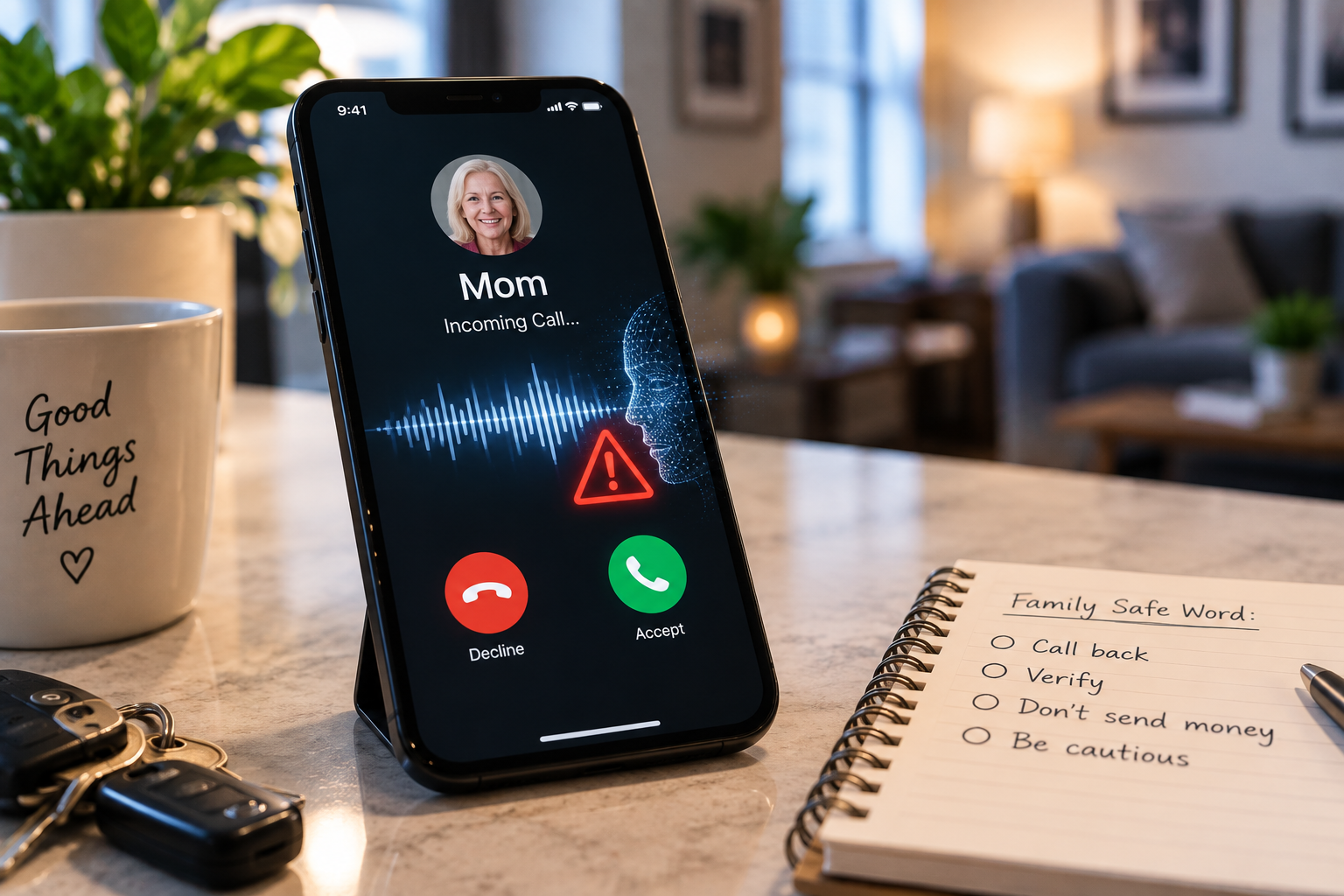
Your phone rings and someone you love is on the other end.
They sound scared. There’s been an accident. They’re in trouble. They need money immediately.
There’s just one problem.
It might not actually be them.
AI voice scams are making it easier for criminals to imitate real people and create convincing emergency calls. Modern voice-cloning technology can produce audio that sounds remarkably similar to someone’s actual voice, adding a disturbing new layer to an old scam.
The FBI has specifically warned that AI-generated content can be difficult to identify and that criminals are using AI alongside impersonation schemes.
Here’s what your family should know before one of these calls happens.
What Is an AI Voice Scam?
An AI voice scam uses artificial intelligence to imitate someone’s voice.
A criminal may pretend to be your child, grandchild, spouse, friend or another person you trust.
The story varies, but the objective is usually the same: create panic and convince you to send money or reveal sensitive information before you have time to verify what’s happening.
You might hear that your family member:
- Was arrested
- Was injured
- Caused a car accident
- Lost their phone
- Is stranded somewhere
- Needs bail money
- Needs money for an emergency
- Can’t talk for very long
That last part is convenient for the scammer. The less conversation you have, the less opportunity there is to notice something isn’t right.
AI Makes “That Doesn’t Sound Like Them” Less Useful
For years, recognizing someone’s voice was a reasonable way to decide whether a phone call was legitimate.
That’s becoming less reliable.
AI-generated audio has advanced enough that the FBI warns cloned voices can sound nearly identical to a real person’s voice.
That means hearing a familiar voice shouldn’t be your only form of verification.
Caller ID isn’t enough either.
Phone numbers and caller ID information can be spoofed, making a call appear to come from someone or somewhere you recognize. The FTC warns consumers not to rely on caller ID alone to determine whether a call is legitimate.
So now we have reached the charming stage of technological progress where both the voice and the phone number can lie to you.
Fortunately, there’s an extremely low-tech defense.
Create a Family Safe Word
Pick a word or short phrase that only close family members know.
It shouldn’t be something easily associated with your family or something you’ve posted publicly.
If someone calls claiming to be a family member in an emergency, ask for the safe word.
Don’t mention the answer.
Ask:
“What is our family safe word?”
Someone genuinely close to you should know it. A scammer relying on information gathered online probably won’t.
You can also create a family verification question, but avoid questions whose answers could easily be found through social media.
Your dog’s name, high school mascot and mother’s maiden name aren’t particularly secret if you’ve spent the last decade posting your life online.
Hang Up and Call Them Yourself
This is one of the simplest ways to defeat an emergency impersonation scam.
If someone calls claiming to be your daughter, son, spouse or another family member and something feels wrong, hang up.
Then call that person using the number already saved in your contacts.
Don’t call a number provided by the person who contacted you.
If they don’t answer, contact another trusted person who may know where they are.
A legitimate emergency can survive an extra minute of verification.
A scammer desperately wants to prevent you from taking that minute.
Be Suspicious When Someone Creates Extreme Urgency
Scammers frequently use fear and urgency because both make people less likely to stop and think. The FBI specifically advises consumers to slow down when a caller creates panic or demands immediate action.
Watch for statements such as:
“Don’t tell Mom.”
“I need the money right now.”
“You can’t call anyone.”
“The police said I only have an hour.”
“My phone is dying.”
“I’ll explain everything later.”
The details may sound convincing, but urgency itself should be a warning sign.
Never Send Money Just Because a Caller Demands It
Be particularly suspicious if the supposed emergency suddenly requires payment through:
- Gift cards
- Cryptocurrency
- Wire transfers
- Cash
- Payment apps
The FTC warns that scammers favor payment methods that make recovering money difficult.
If someone claiming to be a government official or law-enforcement officer tells you to move money to “protect” it, that’s another major warning sign. The Consumer Financial Protection Bureau says legitimate government agencies and financial institutions do not instruct people to send money to protect their funds.
Don’t Assume a Video Call Proves Anything
Voice isn’t the only thing AI can imitate.
The FBI warned in July 2026 that scammers have used AI-generated videos in fraud schemes, including video designed to depict executives, law enforcement officers and other authority figures.
A video call therefore shouldn’t automatically override other warning signs.
If something seems suspicious, verify the person independently.
Talk About This With Parents and Grandparents
Older adults are frequent targets of emergency and impersonation scams, but these schemes can fool people of any age.
The best time to explain AI voice cloning to your family isn’t while someone is panicking on the phone.
Do it beforehand.
Agree that nobody in the family will be offended if someone hangs up during an alleged emergency and calls back independently.
Set your family safe word.
Explain that voices can be cloned and caller ID can be spoofed.
Those few minutes of preparation can make an unexpected call much easier to handle.
What Should You Do If You Already Sent Money?
Act quickly.
Contact the bank, credit card company, payment service or other financial institution involved and explain what happened.
Depending on how the payment was made and how quickly you respond, there may be options for stopping or recovering it.
You can also report internet-enabled fraud to the FBI’s Internet Crime Complaint Center and report scams to the Federal Trade Commission.
If you gave the scammer passwords or account information, change the affected passwords immediately and secure those accounts.
AI Voice Scams Are Another Reason to Verify First
AI isn’t creating an entirely new category of crime here.
Impersonation scams have existed forever.
What’s changing is how convincing they can become.
A familiar voice, a recognizable phone number or even convincing video should no longer be enough to make an important financial decision.
When a call involves money, sensitive information or an emergency, verify the person through another method before doing anything.
And while you’re tightening up your digital defenses, read Stop Scanning Random QR Codes. Here’s What Can Happen for another increasingly common way scammers try to get people from their phones to fraudulent websites.
FAQ
Can Scammers Really Copy Someone’s Voice With AI?
AI technology can generate convincing imitations of real voices. The FBI has warned that AI-generated voice cloning can be difficult to distinguish from a legitimate voice.
How Do I Know If a Family Emergency Call Is Real?
Hang up and independently call your family member using a phone number you already know. You can also establish a private family safe word ahead of time.
Can Scammers Fake Caller ID?
Yes. Caller ID can be spoofed, so a familiar name or phone number appearing on your screen doesn’t guarantee the caller is legitimate.
What Is a Family Safe Word?
It’s a private word or phrase known by trusted family members that can be used to verify someone’s identity during an unexpected or suspicious situation.
What Should I Do If I Sent Money to a Scammer?
Contact the financial institution or payment provider immediately. You should also report the incident to appropriate authorities, including the FTC or FBI’s Internet Crime Complaint Center when applicable.
This article may contain affiliate links. If you purchase through these links, we may earn a commission at no extra cost to you.
Helpful Products
- Check this out on Amazon: Identity Theft Protection Roller Stamp
- Check this out on Amazon: RFID-Blocking Wallet
- Check this out on Amazon: Home Document Safe